 Hedgd
Follow along
Hedgd
Follow along
Hedgd
Follow along
Hedgd
Follow along
Pick the lowest price you're willing to accept. Pay the premium upfront. If the market falls below it, you're paid the difference — and your coins never leave your wallet.
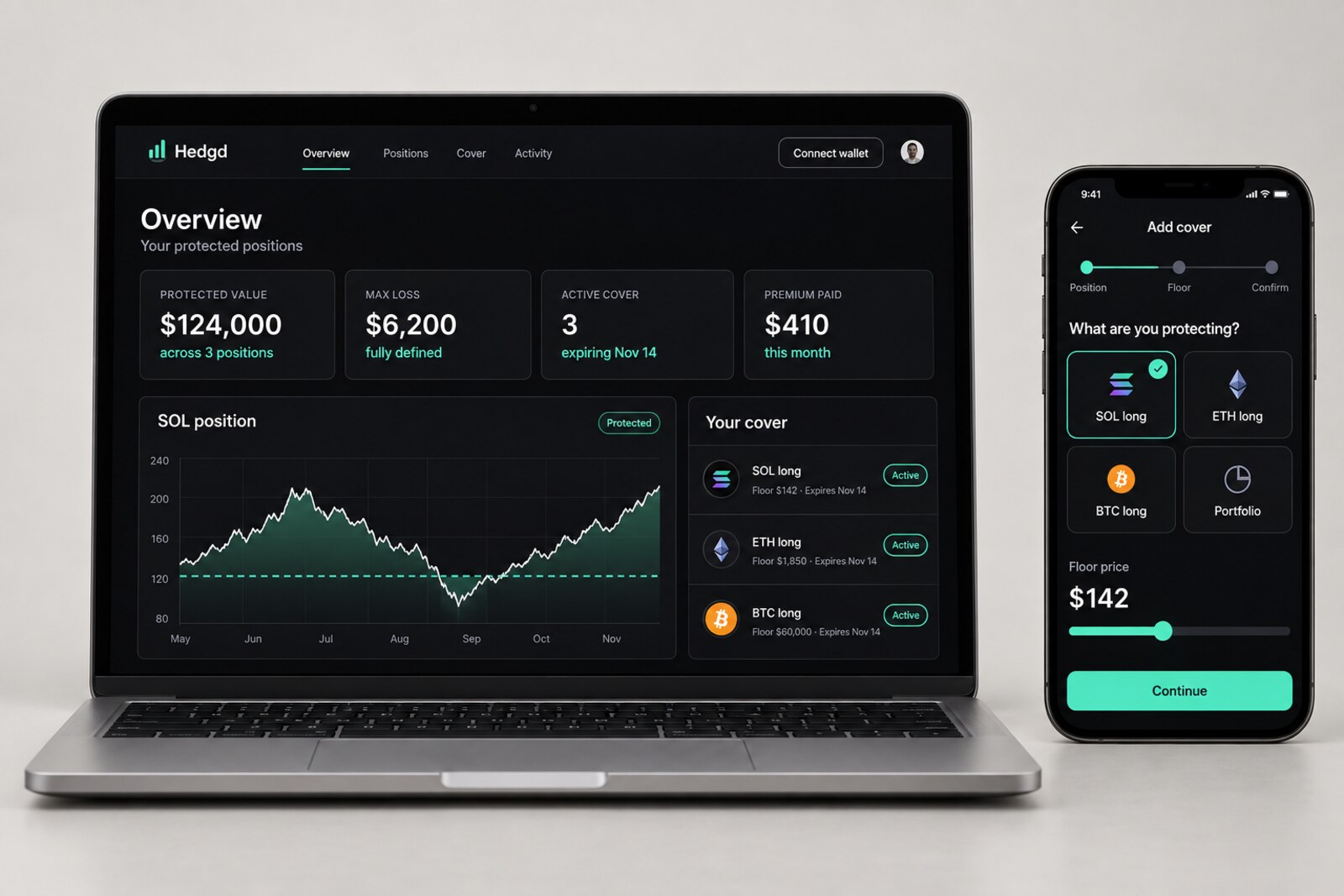
100 SOL bought at $150. Floor set at $130 for 30 days. Premium $220.
| SOL at expiry | Position alone | With a $130 floor | Difference |
|---|---|---|---|
| $95 | −$5,500 | −$2,220 | +$3,280 |
| $130 | −$2,000 | −$2,220 | −$220 |
| $190 | +$4,000 | +$3,780 | −$220 |
The premium is the whole cost. Above your floor it's the only thing you lose. Below it, the payout covers the gap.
1
A spot holding, a long, or the whole portfolio. Hedgd reads the size from your wallet.
2
Drag to the lowest price you'd accept. The premium updates as you move it.
3
If price closes below your floor at expiry, the payout settles to your wallet on its own.
The price dips for ninety seconds, your stop fires, you're in cash, and the chart recovers without you.
A floor pays you if price ends below a level you chose. Your coins stay where they are, and the worst case is the premium.